


Russian Adjectives in the Nominative Case: A Beginner’s Guide

Learning Russian grammar doesn’t have to be difficult! Once you understand how Russian adjectives work, you’ll find it much easier to describe people, places, objects, and everyday experiences.
One of the most important topics for beginners is Russian adjectives in the nominative case. In Russian, adjectives change their endings depending on the gender and number of the nouns they describe. Spelling rules and word stress can also influence which ending you need to use.
The good news? There are a few simple patterns you can learn to start using Russian adjectives correctly.
In this beginner-friendly guide, we’ll explain Russian adjective endings step by step, explore important spelling rules, and give you practical examples and exercises to help you practise.
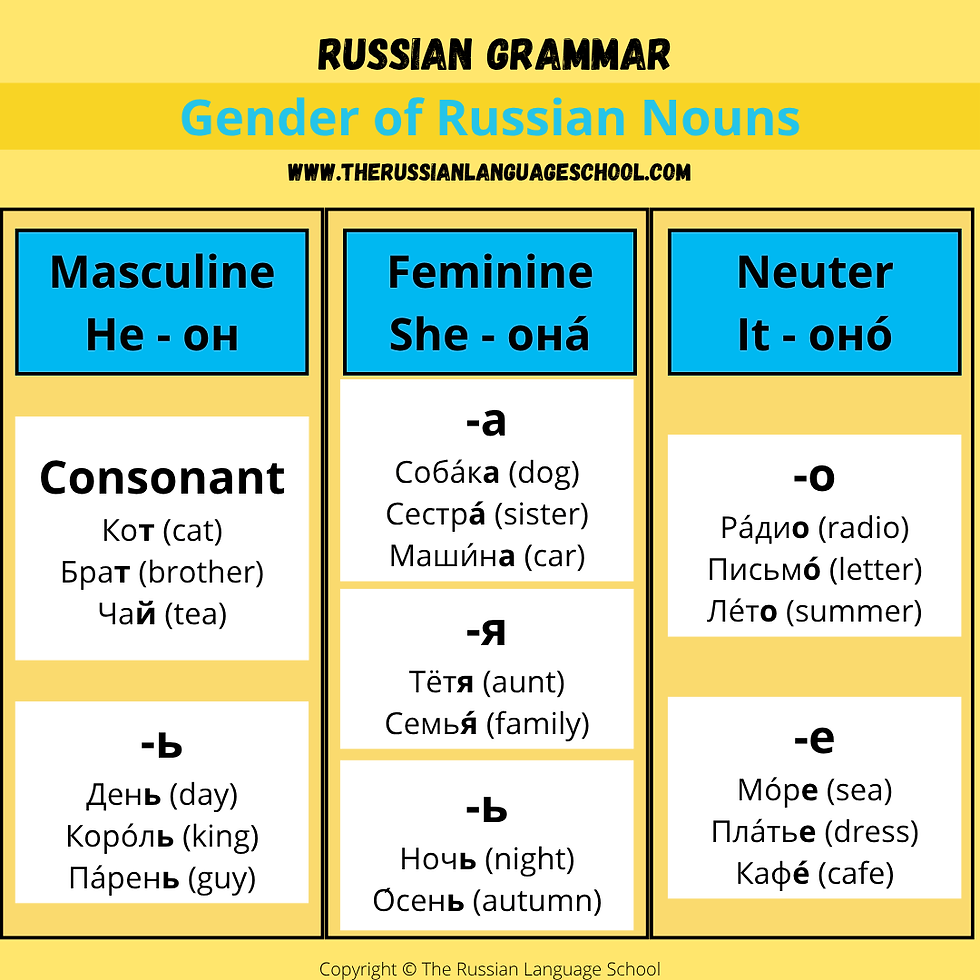
New to Russian grammar? Before learning adjective endings, it’s helpful to understand the gender of Russian nouns. You may also want to read our guide to Russian plural nouns, which explains how Russian nouns change when we talk about more than one person or thing.
What Is the Nominative Case in Russian?
The nominative case (именительный падеж) is the basic form of Russian nouns. It is commonly used for the subject of a sentence and answers two questions:
Кто? (Kto?) — Who?
Что? (Chto?) — What?
For example:
Город — a city
Книга — a book
Море — a sea
Студенты — students
When we want to describe these nouns, we use adjectives in the nominative case.
Compare the following examples:
Большой город — a big city
Новая книга — a new book
Красивое море — a beautiful sea
Интересные студенты — interesting students
Notice that the adjectives have different endings. This is because Russian adjectives must agree with the nouns they describe.
Understanding this rule is the first step towards mastering Russian adjective endings.
Russian Adjective Endings: The Basic Rules
Adjectives are words that describe nouns or pronouns. They tell us more about a person, place, object, or concept. For example, красивый город means “a beautiful city”, while интересная книга means “an interesting book”.
In Russian, adjectives agree with the nouns they describe in gender, number, and case. In the nominative case, the adjective ending depends on whether the noun is masculine, feminine, neuter, or plural.
If you’re unsure how to identify a noun’s gender, read our guide to the gender of Russian nouns. If you need help with singular and plural forms, our article about Russian plural nouns is a useful place to start.
Let’s look at the adjective новый, which means “new”.
Gender or number | Typical adjective ending | Example | Translation |
Masculine singular | -ый, -ий, -ой | новый дом | a new house |
Feminine singular | -ая, -яя | новая книга | a new book |
Neuter singular | -ое, -ее | новое окно | a new window |
Plural | -ые, -ие | новые книги | new books |
These are the most common adjective endings in the nominative case. The exact ending depends on the adjective’s spelling pattern and, in some forms, its stress.
Learning tip: Learn adjectives together with nouns instead of memorising them in isolation. For example, practise новый дом, новая книга, and новое окно. Then add новые дома (new houses) to see how the adjective changes in the plural.
Russian Adjective Endings and Spelling Rules
Russian adjectives follow several patterns depending on the final consonant of the stem.
Understanding these patterns will help you recognise the correct endings and pronounce adjectives more naturally.

1. Hard-Stem Adjectives
Many Russian adjectives have stems ending in a hard consonant. Examples include:
но́вый — new
бе́лый — white
In the nominative case, these adjectives typically have the following endings:
Gender or number | Ending | Example |
Masculine singular | -ый | новый |
Feminine singular | -ая | новая |
Neuter singular | -ое | новое |
Plural | -ые | новые |
For example:
Новый дом — a new house
Новая книга — a new book
Новое окно — a new window
Новые книги — new books
The adjective’s meaning stays the same, but its ending changes to agree with the noun.
2. Soft-Stem Adjectives
Some adjectives have a stem ending in a soft consonant. A common example is си́ний, meaning “blue”.
These adjectives typically use the following endings:
Gender or number | Ending | Example |
Masculine singular | -ий | синий |
Feminine singular | -яя | синяя |
Neuter singular | -ее | синее |
Plural | -ие | синие |
Examples in context:
Синий карандаш — a blue pencil
Синяя ручка — a blue pen
Синее море — a blue sea
Синие глаза — blue eyes
Notice the stress in си́ний: it falls on the first syllable, on the stem. Learning stress alongside new vocabulary will help you pronounce Russian words correctly.
3. Adjectives After Certain Consonants
Russian spelling rules also affect adjective endings after the consonants г, к, х, ж, ш, ч, щ.
Consider the adjective маленький, meaning “small”:
Маленький дом — a small house
Маленькая комната — a small room
Маленькие дети — small children
Notice the endings: -ий in the masculine, -ая in the feminine, and -ие in the plural.
In the neuter singular such adjectives end in -oe after г, к, х (маленькое окно — a small window), and end in -ee after ж, ш, ч, щ if stress is on the stem (свéжее молоко - fresh milk) otherwise it has the ending -oe (большóе окно - big window).
Compare:
Све́жее молоко́ — fresh milk. The adjective stress falls on the stem, so the ending is -ее.
Большо́е окно́ — a big window. The adjective stress falls on the ending, so the ending is -ое.
These patterns are easier to remember when you learn them through examples rather than trying to memorise every rule at once.
4. Masculine Adjectives Ending in -ой
A small but important group of Russian adjectives has the ending -ой in the masculine singular nominative. This ending is always stressed.
Examples include:
Молодо́й — young
Большо́й — big
Друго́й — another or different
Masculine Adjectives in Russian
Masculine nouns take adjectives ending in -ый, -ий, or -ой in the nominative case.
Here are some common examples:
Красивый город — a beautiful city
Большой дом — a big house
Интересный фильм — an interesting film
Хороший ресторан — a good restaurant
Новый телефон — a new phone
Let’s use one of these phrases in a sentence:
Париж — красивый город.
Paris is a beautiful city.
The adjective красивый describes город, which is a masculine noun. That’s why the adjective has a masculine ending.
Feminine Adjectives in Russian
Feminine nouns generally take adjectives ending in -ая or -яя.
Examples include:
Красивая улица — a beautiful street
Новая книга — a new book
Интересная история — an interesting story
Синяя ручка — a blue pen
Большая семья — a big family
For example
Это интересная книга.
This is an interesting book.
The noun книга is feminine, so the adjective takes the ending -ая.
Remember that grammatical gender does not always correspond to natural gender. For example, папа (dad) is a masculine noun despite ending in -а. Adjectives agree with its grammatical gender: мой папа (my dad).
Neuter Adjectives in Russian
Neuter nouns usually take adjectives ending in -ое or -ее.
Examples include:
Большое окно — a big window
Синее море — a blue sea
Новое слово — a new word
Красивое здание — a beautiful building
Интересное упражнение — an interesting exercise
For example:
Это новое слово.
This is a new word.
The noun слово is neuter, so we use новое rather than новый or новая.
Plural Adjectives in Russian
What happens when we want to describe two or more things?
In Russian, adjectives take plural endings when they describe plural nouns, regardless of whether those nouns are masculine, feminine, or neuter.
The most common plural endings are -ые and -ие.
Examples include:
Красивые города — beautiful cities
Новые книги — new books
Интересные фильмы — interesting films
Большие окна — big windows
Хорошие друзья — good friends
For example:
Это интересные книги.
These are interesting books.
Notice that интересный changes to интересные because книги is plural.
This is where understanding Russian plural nouns becomes particularly useful. The noun changes from singular to plural, and the adjective changes too.
Compare these examples:
Singular | Plural | Translation |
новый дом | новые дома | a new house / new houses |
красивая книга | красивые книги | a beautiful book / beautiful books |
большое окно | большие окна | a big window / big windows |
интересный фильм | интересные фильмы | an interesting film / interesting films |
The plural adjective ending is the same regardless of the noun’s gender in the singular, although the correct ending depends on the adjective’s spelling pattern.
For more practice with noun forms, read our guide to Russian plural nouns.
Learning tip: Practise changing complete phrases from singular to plural. Instead of memorising only книга → книги, learn новая книга → новые книги. This helps you practise noun forms and adjective agreement at the same time.
Useful Russian Adjectives for Everyday Conversations
Learning common adjectives helps you start speaking Russian sooner. Here are some useful words for everyday situations.
Russian | English |
Хороший | Good |
Плохой | Bad |
Большой | Big |
Маленький | Small |
Красивый | Beautiful |
Интересный | Interesting |
Новый | New |
Старый | Old |
Вкусный | Tasty |
Дорогой | Expensive |
Now let’s put some of these words into sentences:
Мой город красивый. — My city is beautiful.
Русский язык интересный. — The Russian language is interesting.
Эта книга новая. — This book is new.
У нас большая семья. — We have a big family.
Еда очень вкусная. — The food is very tasty.
Try creating your own sentences using adjectives to describe your home, family, favourite food, or city. Then challenge yourself to describe several things at once.
Common Mistakes with Russian Adjective Endings
One of the most common mistakes Russian learners make is using the same adjective ending with every noun.
For example:
Incorrect: красивый книга
Correct: красивая книга — a beautiful book
The noun книга is feminine, so the adjective must also be feminine.
Another example:
Incorrect: новый окно
Correct: новое окно — a new window
The noun окно is neuter, so we use the neuter adjective form.
And one more:
Incorrect: интересный книги
Correct: интересные книги — interesting books
The noun is plural, so the adjective must also be plural.
To avoid these mistakes, follow three simple steps:
Identify the noun.
Determine its grammatical gender or whether it is plural.
Choose the adjective ending that agrees with the noun.
If you need help identifying gender, revisit our guide to Russian noun gender. If you need more practice with plural forms, our article about Russian plural nouns will help you recognise common patterns.
Russian Adjective Exercises for Beginners
Ready to test your knowledge? Choose the correct adjective form in each sentence.
1. Это красив___ город.
a) красивая
b) красивый
c) красивое
2. У меня нов___ книга.
a) новая
b) новый
c) новое
3. Это больш___ окно.
a) большой
b) большая
c) большое
4. Это интересн___ фильмы.
a) интересная
b) интересное
c) интересные
5. У нас больш___ семья.
a) большая
b) большой
c) большое
6. Выберите правильную фразу. (Choose the correct phrase.)
a) новые книги
b) новая книги
c) новый книги
Answers
b) красивый — Это красивый город.
a) новая — У меня новая книга.
c) большое — Это большое окно.
c) интересные — Это интересные фильмы.
a) большая — У нас большая семья.
a) новые книги — new books.
How many did you get right? If you answered all six correctly, отлично! (Excellent!)
If some answers were tricky, don’t worry. The best way to learn Russian grammar is to practise a little at a time and revisit the rules as you encounter new words.
Frequently Asked Questions About Russian Adjectives
What are the endings of Russian adjectives in the nominative case?
The most common endings are -ый, -ий, and -ой for masculine adjectives; -ая and -яя for feminine adjectives; -ое and -ее for neuter adjectives; and -ые and -ие for plural adjectives. The correct ending depends on the adjective’s spelling pattern.
Do Russian adjectives change according to gender?
Yes. In the singular, Russian adjectives generally change their endings to agree with the grammatical gender of the noun they describe. For example, новый дом (new house), новая книга (new book), and новое окно (new window).
How do Russian adjectives change in the plural?
Russian adjectives generally use the endings -ые or -ие in the nominative plural. For example, новая книга becomes новые книги, and большое окно becomes большие окна. The correct form depends on the adjective’s spelling pattern.
Why do some Russian masculine adjectives end in -ый, others in -ий, and others in -ой?
These endings reflect different adjective patterns. Many adjectives use -ый, soft-stem adjectives often use -ий, and a smaller group uses the stressed ending -ой in the masculine singular nominative. Spelling rules and stress help determine the correct form.
What is the difference between Russian nouns and adjectives?
Nouns name people, places, objects, or concepts. Adjectives describe nouns by providing information about their qualities or characteristics. For example, дом means “house”, while большой means “big”. Together, they form большой дом — “a big house”.
Why is the nominative case important when learning Russian?
The nominative case is commonly used for the subject of a sentence and provides an important foundation for learning Russian nouns and adjectives. Understanding it helps you build simple sentences before moving on to other Russian cases.
Learn Russian with Confidence
Understanding Russian adjectives in the nominative case is an important step towards speaking and writing more confidently. Once you recognise the main adjective endings and spelling patterns, you’ll be able to describe people, places, and things more accurately and build more natural Russian sentences.
Start by practising masculine, feminine, neuter, and plural adjective forms. Learn new words in short phrases, read simple Russian sentences aloud, and return to the exercises whenever you need a refresher.
At The Russian Language School, we believe learning grammar should be practical, engaging, and enjoyable. Whether you’re starting from scratch or building on your existing knowledge, structured lessons and regular practice can help you make steady progress.
Ready to take your Russian to the next level? Explore our Russian language courses and discover how our lessons can help you develop your vocabulary, improve your grammar, and communicate with greater confidence.
Удачи в изучении русского языка! — Good luck with your Russian studies!

Comments